


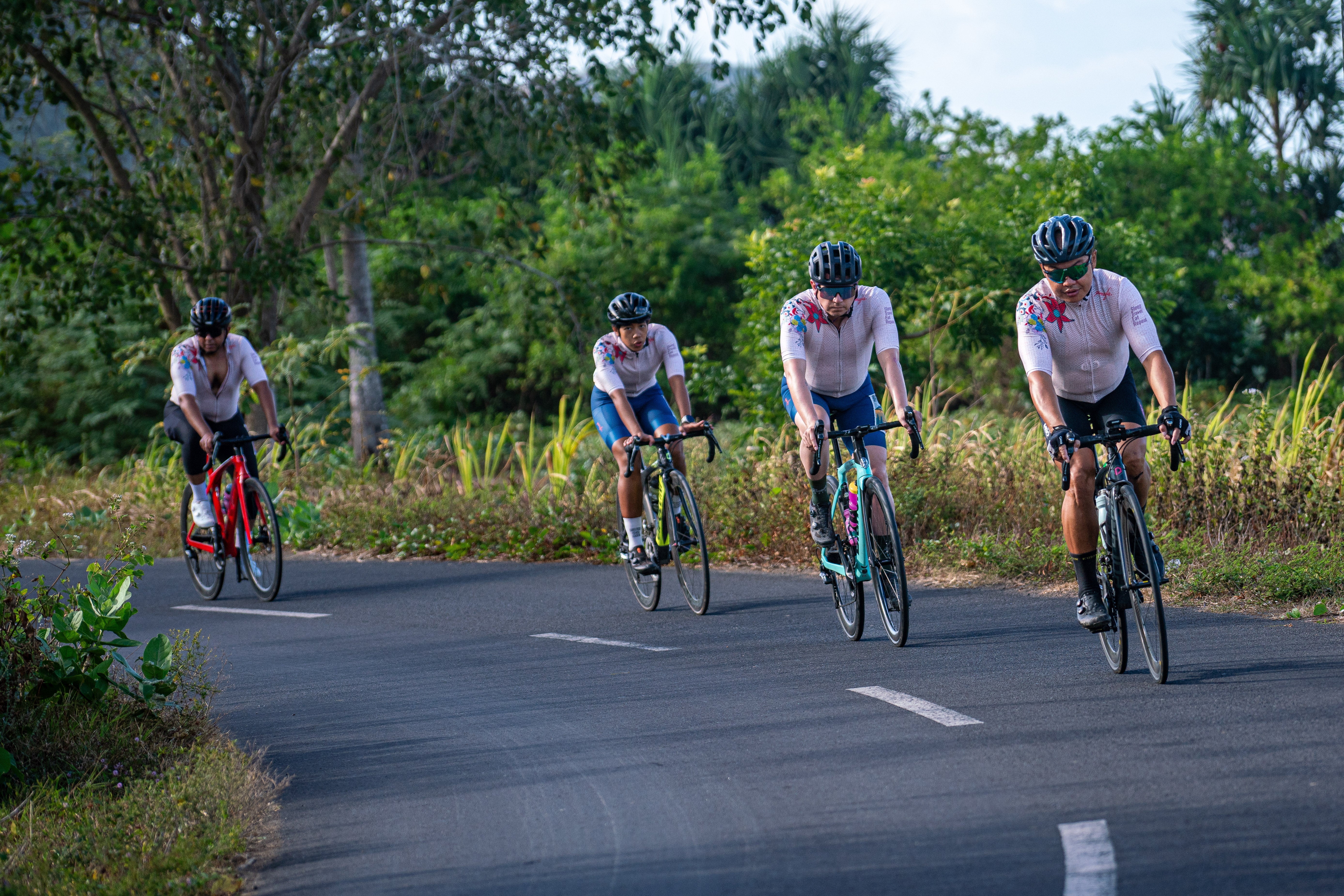


Most travel guides give you the same answer about Bali: "go in the dry season, May to September." That's not wrong. But for cyclists, it's incomplete — and following it without nuance can leave you riding through the busiest weeks of the year, on shoulders crowded with scooter traffic, paying peak rates for a week the locals consider second-best.
Cycling Bali well is about reading the calendar like a local. Here's the month-by-month picture.
How Bali's climate actually works for cyclists

Bali sits 8 degrees south of the equator, which means the temperature stays remarkably steady year-round — daytime highs hover between 27°C and 32°C (81°F to 90°F) regardless of the month. What changes dramatically is the humidity, the rainfall, and where the rain lands.
The island has two seasons: **dry** (roughly April through October) and **wet** (November through March). But "wet" doesn't mean what most people think. Even in the heart of monsoon season, Bali typically gets short, intense afternoon downpours rather than all-day rain. Mornings are often clear, and the storms pass quickly. For cyclists who start early, the wet season is more rideable than its reputation suggests.
The bigger variable for cycling is **wind**. The southeast trade winds pick up in June and peak in July and August, which keeps the air dry and the climbing pleasant on inland routes. By September and October the wind softens, the humidity creeps up, and the rice harvest turns the inland valleys gold.
Month-by-month: when to ride, what to expect

**January–February.** Wettest months. Daily rain. Some routes flood, especially in central Bali. You can still ride if you start before sunrise and accept that you'll get wet at some point. Hotel prices are at their lowest. Good if you're flexible, bad if you're optimizing for ride quality.
**March.** Transitional. Rainfall starts dropping, but trails are still wet and inland villages are mossy. Tourist crowds remain light. Decent for adventurous riders willing to swap routes day-of based on weather.
**April.** The shoulder month most cyclists overlook. Rain has tapered, the landscape is at its greenest, and crowds haven't arrived. Temperatures are perfect and the wind is still light. A quiet, beautiful month — easily one of the best three for cyclists if you're booking late.
**May.** The dry season begins in earnest. Mornings are crisp, evenings are warm, and the rice terraces are at their peak just before harvest. May has the best balance of weather, light, and reasonable prices.
**June.** Officially dry season, officially busy. The southeast trades are kicking in. Climbing is excellent. Beach hotels start filling. Book early.
**July–August.** Peak season. Best weather of the year — clear skies, dry air, comfortable nights. Also the most expensive period and the most crowded roads. This is when most international cycling tours run, including Qunafa's July 22 Archipelago Ascent. Worth the premium if you want the iconic Bali weather window.
**September.** The quietest month inside the dry season. Weather is still excellent, prices begin to drop, and the rice harvest fields turn gold across the central valleys. Many cyclists consider September the smartest month of the year — same dry weather as August, fewer crowds, lower rates.
**October.** Transition back to wet season. Humidity rises. First rain showers return late in the month. Still very rideable in the first three weeks; risky after that.
**November–December.** Rain returns. December is the wettest month after January. Holiday crowds arrive on the beaches. Cycling routes are quieter because most riders have left. If you go, plan early starts and have indoor backup plans.
The window most riders miss
If you have flexibility in your schedule, **April and September are the two best months for cycling Bali** — full dry-season weather, half the crowds, better prices. The window narrows on either side, but those four weeks each give you everything July and August offer with significantly less noise.
That said, if you can only go in July or August, you're still riding in the best cycling weather of the year. The trade-off is just paying more for shared roads.
Beyond the weather: what really determines a good ride
The calendar matters. So does the route, the bike, and the local knowledge of where the scooters thin out and where the climbs are best lit at sunrise. A well-planned Bali ride in October can be better than a poorly-planned ride in July.
Local cycling guides know which valleys are flooded in March and which mountain roads stay rideable a week after monsoon rain. They know which villages still hold morning ceremonies that close certain routes on certain days, and which roads turn into glassy mirrors at sunrise when the rice is freshly planted. None of that shows up in a weather report.
It's also worth thinking about what kind of cyclist you are. If you're chasing personal records on long climbs, the cool, dry mornings of July and August are unmatched. If you're cycling for the experience — the temples, the rice terraces, the warm pause in a village kopi shop after a 60-kilometer morning — April and September give you the same beauty with more room to breathe.
That's the part most travel guides won't tell you, and the part that separates a great cycling week from a frustrating one.
Riding Bali this year?** The Qunafa Archipelago Ascent runs July 22 from Lombok to Bali — a 10-night boutique cycling crossing built for the peak window. **19 seats remain on July 22 → qunafa.travel/bali
Related reads: 7 hidden gem Bali cycling routes · what has changed since the pandemic