


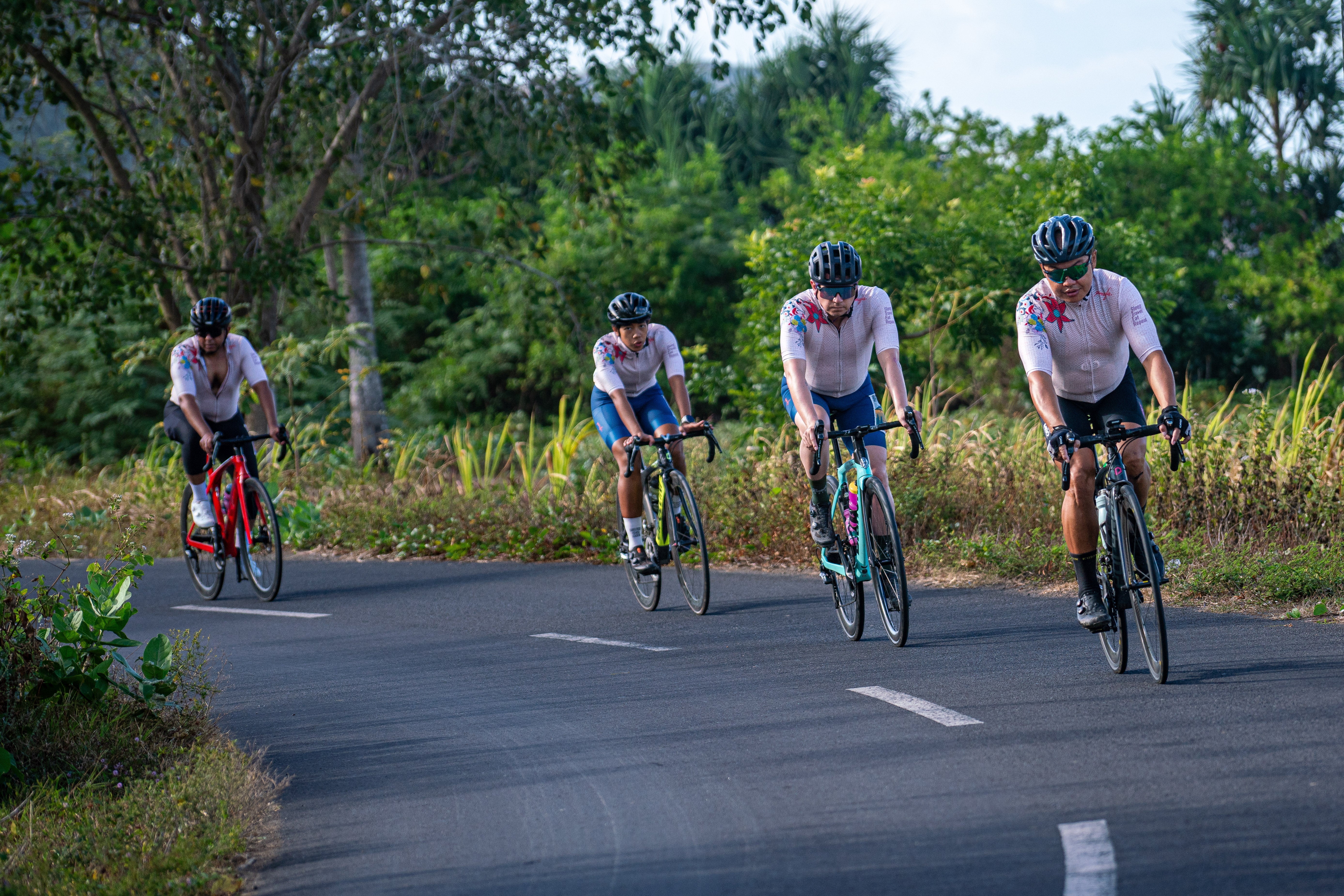


Most cycling tour packing lists read like you're preparing for a solo crossing of the Gobi Desert: panniers, tents, camp stoves, spare spokes, and a satellite beacon. If you've booked a supported tour — the kind where a van carries your luggage, your guides handle mechanicals, and you sleep in hotels — you can leave 70% of that list at home.
The real challenge isn't bringing enough. It's bringing the right things and fitting them into a carry-on. Here is a packing framework built specifically for supported multi-day cycling tours, tested against tropical heat, Mediterranean sun, and mountain chill.
The 3-2-1 Rule
Before you get into specific items, anchor your packing around this core structure:
- 3 cycling kits (bibs/jerseys) — wear one, wash one, dry one
- 2 off-bike outfits — one casual dinner, one lounge/recovery
- 1 pair of non-cycling shoes — sandals or lightweight sneakers
If every item you pack serves one of these three categories (or the "accessories & essentials" category below), you'll fit into a carry-on. If you're adding a fourth pair of shoes or a "just in case" outfit, you're overpacking.
The Cycling Kit: What 3 Kits Actually Means
Bibs or padded shorts (3 pairs). This is the one category where you don't compromise. Three pairs means you always have one clean, one drying, and one you're riding in. Wash them in the sink with hotel shampoo after each ride, roll them in a towel to squeeze out moisture, and hang overnight. Merino or high-end synthetic bibs will dry by morning in most climates. In tropical humidity (Indonesia), bring a fourth pair or accept that sometimes you'll start the day in slightly damp chamois — it's fine, you'll be sweating in 20 minutes anyway.
Jerseys (3). One short-sleeve, one long-sleeve sun jersey, one backup short-sleeve. The long-sleeve sun jersey is the most underrated piece of cycling kit — it keeps you cooler than sunscreen-slathered bare arms and you don't have to reapply sunscreen every 90 minutes. In tropical tours, make two of your three jerseys long-sleeve sun jerseys. You'll thank yourself on Day 3.
Socks (4-5 pairs). Socks are small. Bring extras. Wet socks on Day 2 can mean blisters on Day 3. In hot climates, thin merino socks. In cooler climates, taller merino socks. Never cotton.
Gloves (1-2 pairs). Short-finger for warm tours, add long-finger for mountain or shoulder-season tours. Gloves are not just for comfort — they're for road rash protection. Bring them.
Cycling cap (1-2). Under the helmet: keeps sun off your face, sweat out of your eyes, and rain off your glasses. The most functional item that weighs less than a deck of cards.
Neck gaiter / Buff (1). Soak it in cold water on hot climbs, wear it around your neck on cool descents, pull it over your nose on dusty roads. Smallest versatility-to-weight ratio in cycling.
Rain jacket (1). Even if the forecast is perfect, bring one that packs into a jersey pocket. Mountains create their own weather. A 40-minute descent in the rain without a jacket is miserable. With one, it's an adventure.
Wind vest or gilet (1). The piece experienced cyclists reach for most. Cuts wind chill on descents, adds warmth without bulk on cool mornings, disappears into a jersey pocket when the sun breaks through.
Arm and leg warmers (1 pair each). Together they weigh less than a water bottle and turn a summer kit into a shoulder-season kit. Essential for tours with significant elevation change or early-morning starts.
Cycling shoes. If you clip in, bring your shoes. If your tour provides pedals, confirm the cleat type (SPD-SL, SPD, Look) and bring compatible shoes. Do not break in new cycling shoes on a tour. Your feet will hate you.
What You Don't Need to Pack (Because Your Tour Provides It)
If you're on a premium supported tour, cross these off your list entirely:
- Tools and spares. Your guides carry a full workshop: multi-tools, pumps, tubes, tire levers, chain tools, spare cleats, lubricant, CO2. Unless you ride a bike with highly specific parts, leave the tools at home.
- Nutrition and hydration. The support van has water, hydration tablets, energy bars, gels, bananas, and whatever else keeps a group fueled. Unless you have a very specific nutrition protocol or dietary restriction, you don't need to pack a week's worth of bars.
- Bike lock. Your bike is either in your hotel's secure storage or being watched by the support crew. In years of running tours, locks have been used exactly zero times.
- Water bottles. Your tour provides them. They're usually a souvenir you take home.
- Towel, shampoo, soap. Hotels have these. Even the most modest boutique hotel provides a towel.
- Extra bike parts. Spare tire, spare chain, spare cables — leave them. If something catastrophic happens to your bike, the support van has a spare bike, not just spare parts.
The principle: if the tour website says "fully supported," trust it. The van isn't just a luggage carrier — it's a mobile bike shop, snack bar, and bail-out vehicle. Pack for what happens on the bike, not what could theoretically go wrong with the bike.
Climate-Specific Adjustments
Tropical (Indonesia, Southeast Asia, summer Mediterranean)
Add:
- A fourth pair of bibs (nothing dries in 90% humidity)
- A second long-sleeve sun jersey (swap out one short-sleeve)
- High-SPF sunscreen (50+) — the equatorial sun doesn't care about your base tan
- Electrolyte tablets if you're particular (your tour provides them, but if you like a specific brand, bring it)
- Chamois cream — humidity plus saddle time is a recipe for saddle sores
Skip:
- Leg warmers (you won't use them)
- Insulated vest (you won't use it)
Mediterranean Shoulder Season (Mallorca spring/fall, Sicily October)
Add:
- Insulated gilet or lightweight packable jacket
- Full-finger gloves
- Leg warmers and arm warmers (you'll use them every morning)
- Clear-lens glasses for overcast days or late-afternoon light
Skip:
- Nothing from the core list — shoulder season requires layers
Mountain / High-Elevation (Alps, Dolomites, Pyrenees)
Add:
- Waterproof jacket (not just packable — genuinely waterproof)
- Full-finger waterproof gloves
- Thermal base layer
- Overshoes
- Warmer socks (merino, taller)
Skip:
- Short-finger gloves (you'll reach for full-finger every time)
Off-Bike: The 2-Outfit System
After 5-7 hours in the saddle, you'll shower and head to dinner. You do not need a new outfit every night. Here's what actually works:
- Outfit 1 (dinner): One pair of lightweight pants or a casual dress/skirt, one clean shirt or blouse, one lightweight sweater or jacket. This is what you wear to dinner every night. Nobody on a cycling tour judges you for wearing the same dinner outfit — they're doing it too.
- Outfit 2 (recovery/lounge): Comfortable shorts or leggings, a t-shirt. This is for breakfast, pre-ride, post-ride lounging, and the flight home. Can double as pajamas.
Shoes: One pair of sandals or lightweight sneakers. Sandals if you're going somewhere warm (they double as post-ride recovery for swollen feet). Sneakers if it's cool. Not both.
The Day-Ride Carry
What you carry on the bike each day, in your jersey pockets or a small saddle bag:
- Phone (in a waterproof pouch or ziplock bag)
- ID, credit card, some cash
- Rain jacket (if any chance of weather)
- 2 water bottles on the frame
- Sunglasses
- Sunscreen (travel-size, reapply at rest stops)
- Any personal medication (inhaler, epipen)
That's it. Everything else — food, extra water, your spare kit, your off-bike clothes — is in the support van at the next rest stop, 25-40 km ahead.
The Carry-On Strategy
Most supported cycling tours start at an airport. Your checked bag contains your bike (if you bring your own) or nothing at all. Your carry-on contains everything you cannot afford to lose. Here's the split:
Carry-on (non-negotiable):
- 1 full cycling kit (bib, jersey, socks) — if your checked bag is delayed, you can ride Day 1
- All cycling shoes (irreplaceable on short notice)
- Helmet (clip it to the outside of your bag)
- Sunglasses
- All electronics and chargers
- Medications, passport, wallet
Checked bag (if bringing your own bike):
- Bike in a bike box or bag
- Remaining 2 cycling kits
- Off-bike clothes
- Toiletries
- Anything you could buy at a local shop in a pinch
If you're renting a bike from the tour operator (which Qunafa provides), you can fly with only a carry-on. Most premium tour guests are shocked to discover they can do a 7-day cycling tour with a single carry-on bag. They can.
What Qunafa Provides
On every Qunafa tour — The Archipelago Ascent (Indonesia), Sicily Coast to Coast, and upcoming Mallorca routes — the following is standard:
- Bike: Qunafa Shahrazad titanium frame, custom-fitted to your measurements, with Shimano 105 or Ultegra groupset. Pedals set to your cleat type. Bike is cleaned, lubed, and prepped after every stage.
- Helmet: Provided if you don't bring your own.
- Water bottles: Two Qunafa bottles, yours to keep.
- Nutrition: Support van stocked with water, hydration tablets, energy bars, gels, bananas, trail mix. Rest stops include real food — local pastries, fruit, sandwiches.
- Mechanical support: In-house mechanic travels with the tour. Full toolkit, spare wheels, spare bike. If your bike has a problem, it's fixed while you're having a coffee.
- Luggage transfer: Your bag is in your next hotel room when you arrive. You ride with jersey pockets.
A supported tour changes the packing equation completely. You're not carrying your life on your bike. You're carrying the essentials for the next 30-40 km, and everything else is waiting for you at the hotel. Pack accordingly.
Related reads: what to pack for a Bali cycling tour · what to expect on a supported cycling tour