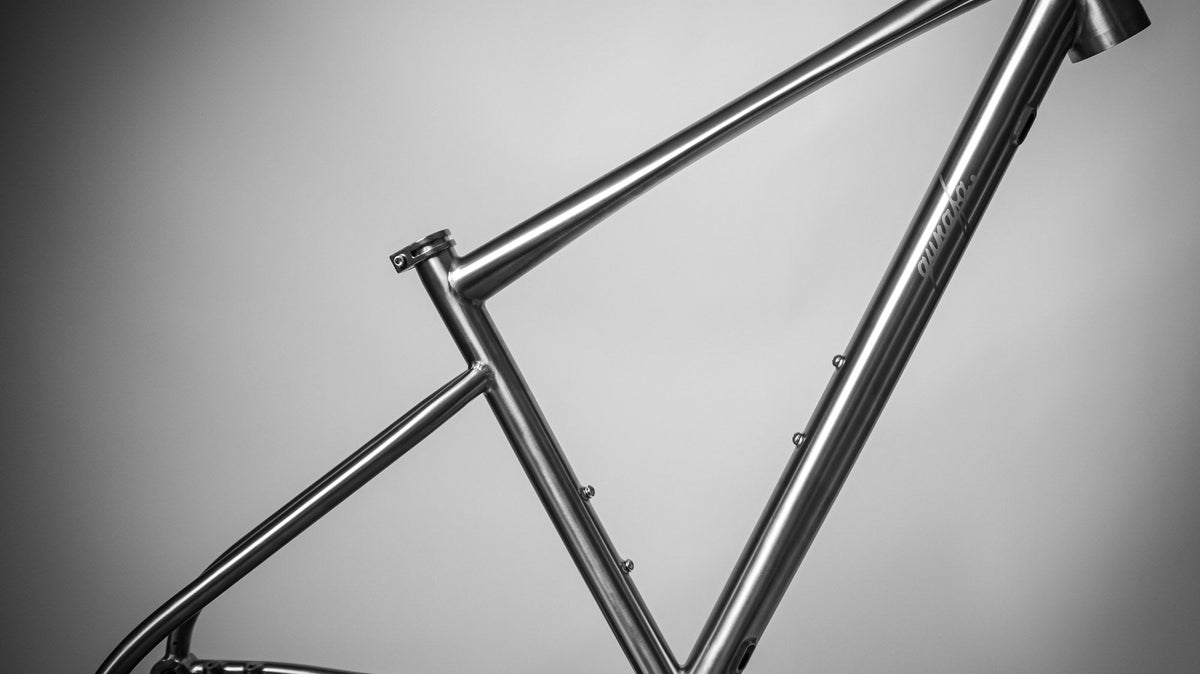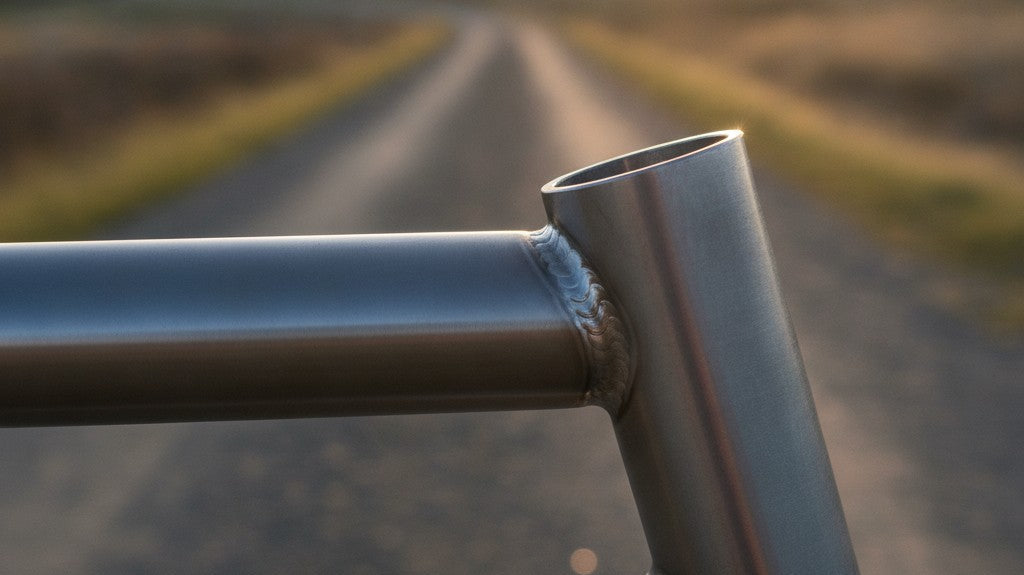


The question everyone asks at the counter
Every rider asks it, usually quietly, usually while looking at the price tag: are titanium bikes worth it?
We asked ourselves the same thing in 2020, when the world stopped and we pivoted to bikes. We tried around twenty brands. Some were fast but harsh. Some were comfortable but dull. Most were fine for a season or two, then started to feel like something we'd replace.
Titanium was the one that kept making us stop and say, oh, that's what this is supposed to feel like.
So here's our honest answer. It's not the sticker price you should look at. It's the cost per decade.
Think in years, not dollars
A bike you replace every three or four years costs more than it looks. Add the upgrade itch, the cracked paint, the frame you quietly stopped trusting, and the "newer model" that makes the old one feel dated.
Titanium works differently, and the reasons are mostly physical:
- It doesn't rust. Rain, sweat, salty coastal air and a winter in the garage don't eat it.
- It doesn't need paint to survive. There's nothing underneath to protect, so a scratch is just a scratch.
- It handles fatigue well. Properly built titanium flexes and recovers, ride after ride.
None of that is a trick. It's what the metal does. That's why a lot of riders keep a titanium frame for a very long time and just swap the parts that wear out.
Spread the cost of one frame across ten years of weekend rides, tours and the occasional bad decision on a gravel descent, and the number looks very different from the one on the tag.
The ride is the real reason
Cost per decade is the argument for your head. The ride is the argument for your legs.
Our line for it is simple: the snap of a race bike with the comfort of an endurance frame. It's rare to get both. Stiff bikes tend to punish you by hour four. Soft bikes feel lovely and then feel like work when you stand up on a climb.
Titanium sits in the middle. It responds when you push and calms the road down when you're tired. On a long day in the saddle, you notice the difference mostly at the end. You're less wrecked than you expected to be.
That matters if you do anything long. On our Sicily mountain days and our multi-day tours, the bike that feels good at kilometer 10 isn't the one that counts. The one that still feels good at kilometer 100 is.
When titanium is probably not worth it
We'd rather tell you this than sell you something.
- If you ride a few times a year, a good used aluminum bike will do you fine.
- If you change bikes for every new standard, buy something cheaper and enjoy the cycle.
- If the only goal is the lightest possible race weapon, that's a different conversation.
Titanium pays off when you ride often, ride far, and want one bike you stop thinking about. The bike should disappear, and the road should be the thing you remember.
Classic or 3D-printed: one metal, two ways in
We make titanium two ways, and we get asked about it all the time.
Classic titanium uses traditional tubing and welded joints. It's the way most people discover the material, and it's the one we hear riders describe as balanced and honest.
3D-printed titanium takes the same metal further. We can shape junctions that tubing can't, in the places where a frame works hardest. It's the premium tier, for riders who want that extra level of craft.
Two bikes, one metal, zero compromise on the ride. Honestly, plenty of riders who try both end up preferring the classic for its balance. That tells you how good the entry point already is.
What it feels like at the end of a long day
Picture the last climb of a long day in the Madonie, golden light on the stone villages, legs tired but not broken. You're not thinking about your frame. You're thinking about dinner, the coffee you'll drink tomorrow, the person next to you laughing at a joke from three hours ago.
That's what you're really paying for. The frame just gets out of the way, so you're not thinking about the bike at all.
So, are titanium bikes worth it?
If you ride a lot, yes, and the math gets better every year you keep it.
If you ride a little, probably not yet, and that's fine.
If you're somewhere in between, the best way to know is to ride one. Feel the difference between a bike that works hard against the road and one that works with you.
And if you'd like to find out what a long day on the right bike feels like, come ride with us. See our guided cycling tours →