


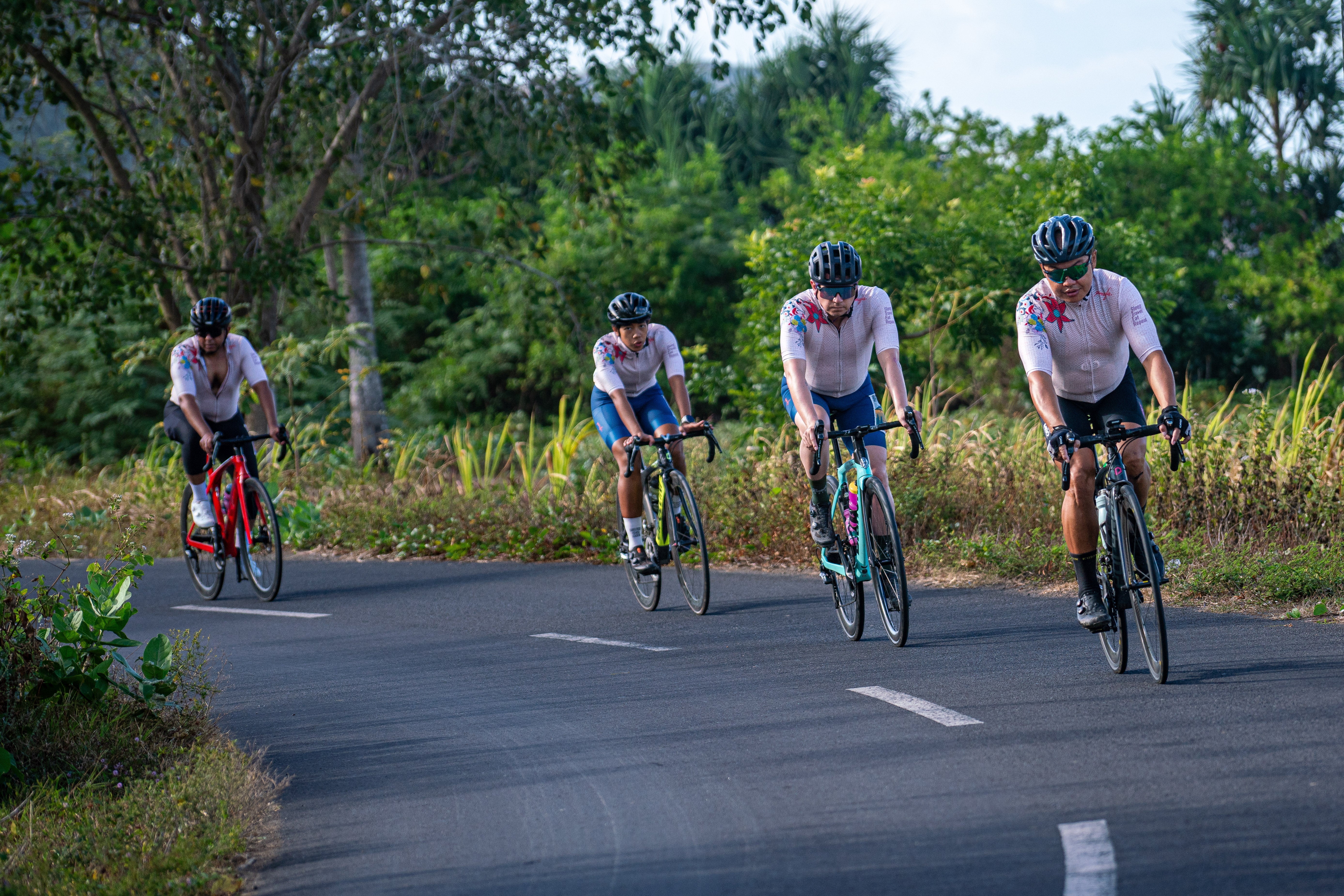


Cycling Lombok: Indonesia's Undiscovered Riding Paradise
The Island Bali Wishes It Still Was
Bali gets the magazine covers. Lombok gets the riders who know better.
Just 35 kilometers east of Bali across the Lombok Strait, this island is what Bali was 30 years ago — before the beach clubs, before the traffic jams, before the Instagram geotags erased any sense of discovery. For cyclists, the difference is visceral: on Lombok, you can ride for two hours and count the cars on one hand.
The island is dominated by Mount Rinjani (3,726m), Indonesia's second-highest volcano, whose slopes create a cycling topography that's rare in the tropics: genuine alpine climbing, coastal rollers, and highland plateaus — all on the same island, often on the same ride.
Lombok isn't a "Bali alternative." It's a distinct riding destination with its own terrain, its own culture (Sasak, not Balinese Hindu), and its own rhythm. Here's what you need to know before you point your handlebars east.
The Terrain: Three Riding Zones, One Island
Lombok's cycling breaks into three distinct regions, each with a different riding personality:
The Volcanic North — Climbing Country
The slopes of Rinjani produce the island's most demanding and rewarding roads. Starting from Senaru or Sembalun, the roads climb through primary rainforest, past coffee and cacao plantations, with the volcano's crater rim visible on clear mornings. These are genuine climbs — 5-8% gradients sustained over 10-15km sections — but the road surface is generally good and traffic is almost nonexistent.
The descent from Pusuk Pass toward the coast is one of Southeast Asia's finest: 12 kilometers of winding tarmac through monkey forest, ending at the sea. You'll want a bike with confident descending geometry and good brakes.
The Central Rice Belt — Rolling Terrain
Between Mataram and Praya, the land flattens into Lombok's agricultural heartland. Roads weave through endless rice paddies, connected by raised single-lane paths between irrigation channels. This is the Lombok of postcards: farmers in conical hats, water buffalo in the fields, the occasional village mosque calling the faithful to prayer.
These roads are flat to rolling, perfect for recovery days or building base mileage. The challenge isn't elevation — it's navigation. The network of village roads doesn't match any map, which is where a local guide becomes invaluable.
The Southern Coast — Raw and Wide Open
South of Kuta Lombok (not Bali's Kuta — this one is wilder, emptier, and surrounded by cliffs, not clubs), the roads open into sweeping coastal highways with panoramic ocean views. The Mandalika circuit — a 17km loop built around the MotoGP track — is smooth, fast tarmac that sprinters will love. Beyond the circuit, the roads turn raw: dirt and gravel tracks leading to hidden surf breaks and fishing villages where tourism hasn't yet arrived.
This is where Lombok's future lives. The Mandalika Special Economic Zone is bringing infrastructure investment, but for now, the south feels like a secret.
Sasak Culture: The Heart of Every Ride
Lombok's indigenous Sasak people make up 85% of the island's population, and their culture is inseparable from the cycling experience. Unlike Bali, where Hinduism shapes every village temple, Lombok is predominantly Muslim — and the rhythms of daily life follow the call to prayer, not the tourist calendar.
When you ride through a Sasak village, the experience is genuine. Kids run alongside your bike shouting "Hello mister!" not because they want money, but because a cyclist is still a novelty worth chasing. Women weaving songket textiles on wooden looms wave from shaded verandas. Old men sitting in berugak (traditional open-air huts) nod as you pass.
This cultural dimension is what separates a Lombok ride from a European one. You're not just covering kilometers — you're moving through a living culture that predates tourism.
When to Ride Lombok
Lombok's climate follows Indonesia's tropical pattern:
Dry season (May–September): The prime riding window. Temperatures range from 22-32°C (72-90°F). Mornings are crisp — start early. Afternoon rain is rare but possible in June. July and August are the driest, clearest months.
Shoulder season (April, October): Rideable, but expect afternoon showers. Roads can be slick on descents.
Wet season (November–March): Not recommended for road cycling. Monsoonal rain makes descents dangerous and inland roads can flood.
Best months for cycling: July and August. This is when Qunafa runs The Archipelago Ascent — not by coincidence.
The Archipelago Ascent: Lombok, Done Right
Here's the thing about cycling Lombok independently: it's possible, but it's harder than it looks.
The roads don't match maps. The climbs are unmarked. The best routes connect through village paths a GPS won't find. Mechanical support is nonexistent outside Mataram. And after a 90km day in tropical heat, the last thing you want to do is negotiate with a guesthouse owner who doesn't speak English.
This is why Qunafa built The Archipelago Ascent — not as a bike tour, but as a boutique cultural voyage across Indonesia's most dramatic island chain.
The 10-day route (every two weeks, June 13 – September 19, 2027) starts in South Lombok's Sasak heartland, climbs through the coastal hills of Mandalika, crosses the Lombok Strait to Gili Trawangan, then continues to Bali via the Kintamani volcanic ascent before descending to Ubud's art villages and finishing in Seminyak's boutique luxury.
Every day: you ride what's on your handlebars. A support van carries everything else. Professional guides who grew up on these roads handle navigation. Mechanical support follows the group. Your luggage is waiting at the next hotel. Dinner is arranged, not figured out.
The grit of the climb. The soul of the village. The luxury of the recovery.
This isn't bikepacking. It's cycling as it should be — all adventure, no logistics.
Practical Tips for Cycling Lombok
Getting there: Fly into Lombok International Airport (LOP) in Praya. Direct flights from Singapore, Kuala Lumpur, Jakarta, and Surabaya. Ferry from Bali (Padang Bai to Lembar) takes 4-5 hours and costs ~$5.
Bike transport: If bringing your own bike, fly with it as checked luggage (most airlines accept bike boxes for ~$50-100). Assembly space at LOP is limited — arrive during daylight.
Road conditions: Main roads are good asphalt. Village roads vary from smooth to broken tarmac to dirt. 28mm+ tires recommended. 32mm ideal.
What to carry on the bike: 2 bottles minimum. It's hot. Electrolyte tablets are essential — you'll sweat more than you think. Sunscreen is non-negotiable (tropical sun at 8° south latitude).
Safety: Lombok drivers are generally courteous to cyclists — more so than Bali. That said, ride defensively. Use lights even during daytime. A local guide eliminates navigation risk entirely.
Post-ride: Indonesian food is excellent recovery fuel. Nasi goreng (fried rice with egg), gado-gado (vegetable salad with peanut sauce), and fresh coconut water from roadside stalls are everywhere. The coffee in Lombok is exceptional — the island produces some of Indonesia's finest robusta and arabica beans.
Why Lombok Now
Lombok is at an inflection point. The Mandalika development, the MotoGP circuit, and growing direct flight routes are bringing infrastructure and visitors — but the island hasn't yet crossed the threshold into mass tourism.
Cyclists who ride Lombok now will talk about it the way cyclists who rode Mallorca in 2005 talk about Sa Calobra: "I was there before everyone else found it."
The roads are empty. The climbs are unridden. The villages are genuinely welcoming. And for 10 days this July, a small group will experience it the way it deserves to be experienced — fully supported, culturally immersed, and absolutely unforgettable.
The Archipelago Ascent: every two weeks, June 13 – September 19, 2027. Lombok → Gili Trawangan → Bali.
[CTA: View the full itinerary →]
Related reads: Lombok to Bali by bike · cycling in Bali