


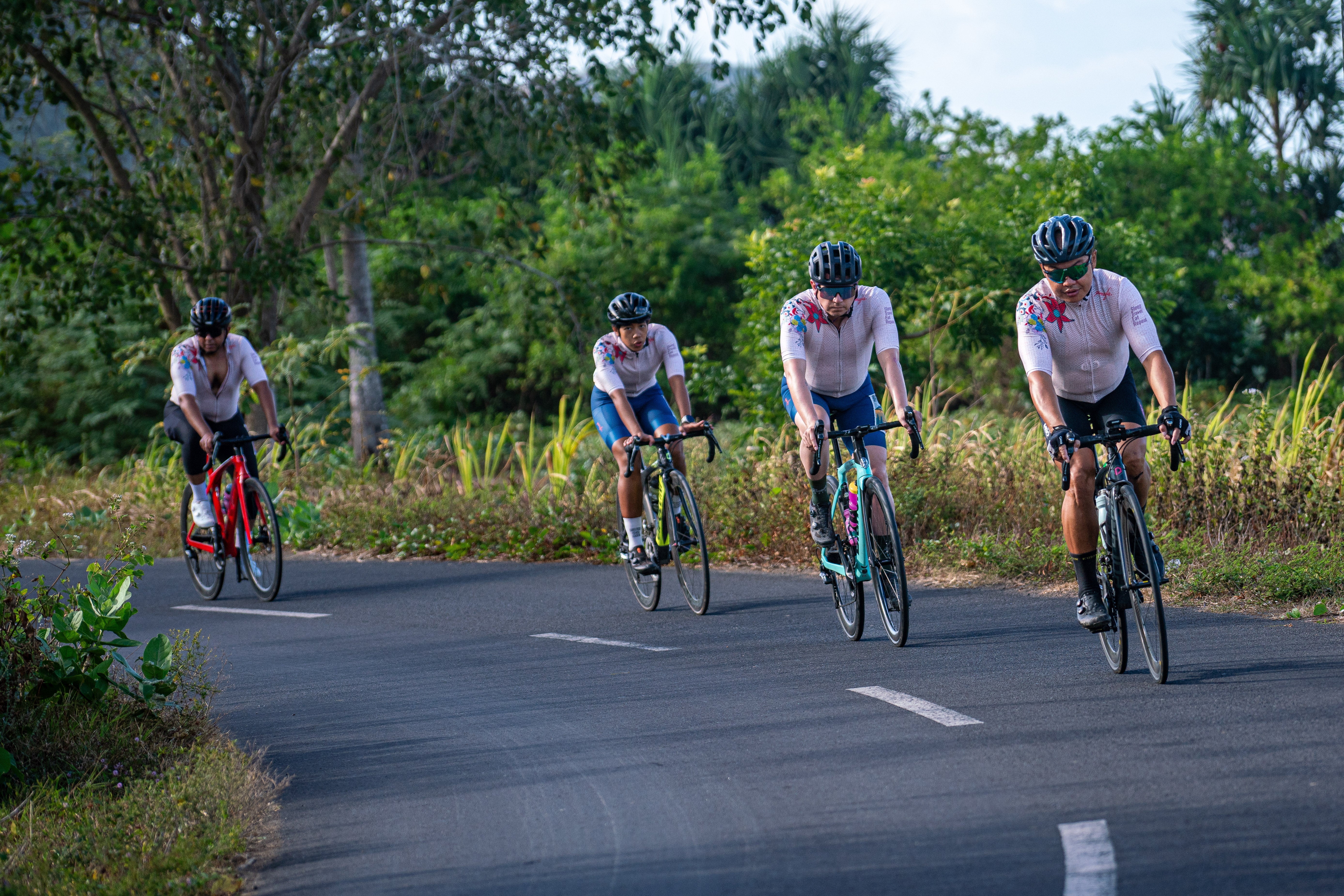


In 2020, you couldn't pay someone enough to cycle on Bali's roads. The island's grinding traffic — 16 million tourists funneled through narrow two-lane roads — made the proposition closer to a death wish than a dream ride. Then COVID hit, the borders slammed shut, and something unexpected happened: Bali became a cyclist's paradise.
By 2021, the South China Morning Post was running features on the "silver lining" of pandemic Bali: empty highways, reclaimed coastal boardwalks, and a local cycling renaissance that saw thousands of Indonesians dust off bikes and discover their own island on two wheels. A 2024 study in the *International Journal of Sustainable Development and Planning* confirmed what everyone on the ground already knew — cycling tourism in Bali "experienced a significant increase" during and after the pandemic, with 31.1% of Indonesians picking up cycling as their primary recreational activity.
Fast forward to today, and the picture is more complicated. Bali is back — and then some.
The Roads: From Empty Highways to Record Crowds
The pandemic-era window of empty roads didn't last. By 2025, Bali logged nearly 7 million international arrivals, and total visitor numbers surged past 16 million, according to the Asia Media Centre. Bali has since been crowned the world's top travel destination.
What this means for cyclists: the south Bali tourism belt — the corridor from Ngurah Rai Airport through Seminyak, Canggu, and up to Ubud — is congested again. Streets that carried motorbikes between rice paddies during COVID now experience daily gridlock. If your image of Bali cycling was formed by those 2021-era blog posts showing empty coastal highways, you need to recalibrate.
But here's the nuance that the aggregate numbers don't show: the tourism influx is uneven. A 2023 study from Bali's Central Bureau of Statistics (bali.bps.go.id) found that 78.1% of visitors concentrate in just two regencies — Badung (48.2%) and Denpasar (29.9%), both in the south. Gianyar (Ubud's regency) captures another 13.1%. That leaves the entire north — Buleleng, the volcanic interior, the twin lakes region — at a fraction of the traffic.
The takeaway for cyclists: south Bali is no longer the dream it was in 2021. But north Bali — the Munduk climbs, the Buyan and Tamblingan lake circuit, the Sidemen valley — is still quiet. The window moved; it didn't close.
The Rules: What Every Cyclist Needs to Know About Entry
If you haven't flown into Bali since before 2020, the entry process has changed. None of it is complicated, but ignoring it means delays at Ngurah Rai.
No COVID vaccination proof. As of now, Bali has fully dropped all pandemic-era health entry requirements. No vaccine certificates, no quarantine, no pre-departure PCR tests. You walk in like it's 2019.
The All Indonesia Declaration Form. Instead of paper forms at immigration, every visitor now completes a single digital form consolidating health, customs, and immigration data. You fill it out online within three days of departure and show a QR code on arrival. It's faster — but you need to do it before you fly.
Visa on Arrival (VOA) or e-VOA. Still IDR 500,000 (roughly $32 USD) for a 30-day stay, extendable for another 30. The e-VOA can be processed online before departure, which is worth the five minutes it takes — the manual VOA queue can eat 45 minutes during peak season.
The tourism levy. New in 2024 and now fully enforced: IDR 150,000 (about $10 USD) per visitor, collected either online before departure or on arrival. The levy funds environmental conservation and cultural preservation. Pay it online and skip the second queue.
Where to Ride Now: South vs North Bali
Here's what's changed for specific cycling routes:
South Bali (Kuta, Seminyak, Canggu, Jimbaran): Avoid for road cycling. The pandemic-era coastal boardwalks are shoulder-to-shoulder again — these areas are for beach clubs, not bikes. Gravel riders can find morning patches in the Bukit Peninsula, but by 9 AM the roads fill up.
Ubud and Central Bali: Still rideable but earlier starts are mandatory. The Tegallalang rice terrace loops that were empty at 8 AM in 2022 now see tourist buses by 9. Start at 6 AM and you'll have two hours of clear roads. After that, share the tarmac with scooters and vans.
East Bali (Sidemen, Karangasem, Mount Agung foothills): This is where the serious cyclists are going now. The Sidemen Valley — a ribbon of smooth tarmac through terraced rice fields with Mount Agung looming in the background — remains quiet. The climb up to Besakih Temple at Agung's base is one of the best-kept secrets in Asian cycling. Traffic is minimal, the grades are brutal (1,000m in 8.5km at 12% average), and the descent is worth every meter of climbing.
North Bali (Munduk, Bedugul, Buyan-Tamblingan): The north is today's answer to "where do I cycle in Bali without traffic?" The twin lake circuit at Buyan and Tamblingan — 40km of undulating roads through highland forests at 1,200m elevation — sees perhaps 1% of the traffic that Canggu does. The Munduk climb from the north coast is a Category 1 ascent through coffee plantations and clove groves, with temperatures 10°C cooler than sea level. If you're a serious cyclist coming to Bali now, point yourself north.
Lombok: The island next door. Still dramatically under-visited compared to Bali. The south Lombok coastal roads — around Mandalika and Selong Belanak — are what south Bali felt like in 2021: smooth tarmac, ocean views, and more goats than cars on the road. The crossing from Lombok to Bali by bike (via ferry to Padang Bai) is one of Southeast Asia's most underrated multi-day routes.
Why Boutique Makes More Sense Than Ever
The post-pandemic Bali cycling story isn't just about which roads are crowded. It's about how you experience them.
In 2021, you could navigate Bali solo with a rental bike and Google Maps. It's still possible — but the margin for error is thinner. The wrong road at the wrong time means scooter traffic in 35°C heat. The right road at the right time means 60km of descending volcanic highlands with Mount Agung in your rearview mirror.
That's the difference local knowledge makes. The routes that are still magical require earlier starts, smarter routing, and an understanding of Bali's geography that you don't get from Strava heatmaps alone.
This is why boutique guided tours — small groups, local guides who know which roads the buses avoid, support vehicles handling logistics — have become the rational choice. The roads are the same narrow ribbons they've always been. Knowing which ones to ride and when is worth the cost.
Ready to see Bali's best roads before the buses do? The Qunafa Archipelago Ascent runs every two weeks, June 13 – September 19, 2027 — 10 nights across Lombok, Gili T, and Bali, riding the quiet northern routes and the volcanic heart of Kintamani. Boutique groups, titanium bikes, SAG support, and local guides who know every bakery and switchback. **19 seats remain.** See the full itinerary → qunafa.travel/bali
← [[🏠-DASHBOARD|Dashboard]]
Related reads: best time to cycle Bali · hidden gem cycling routes