


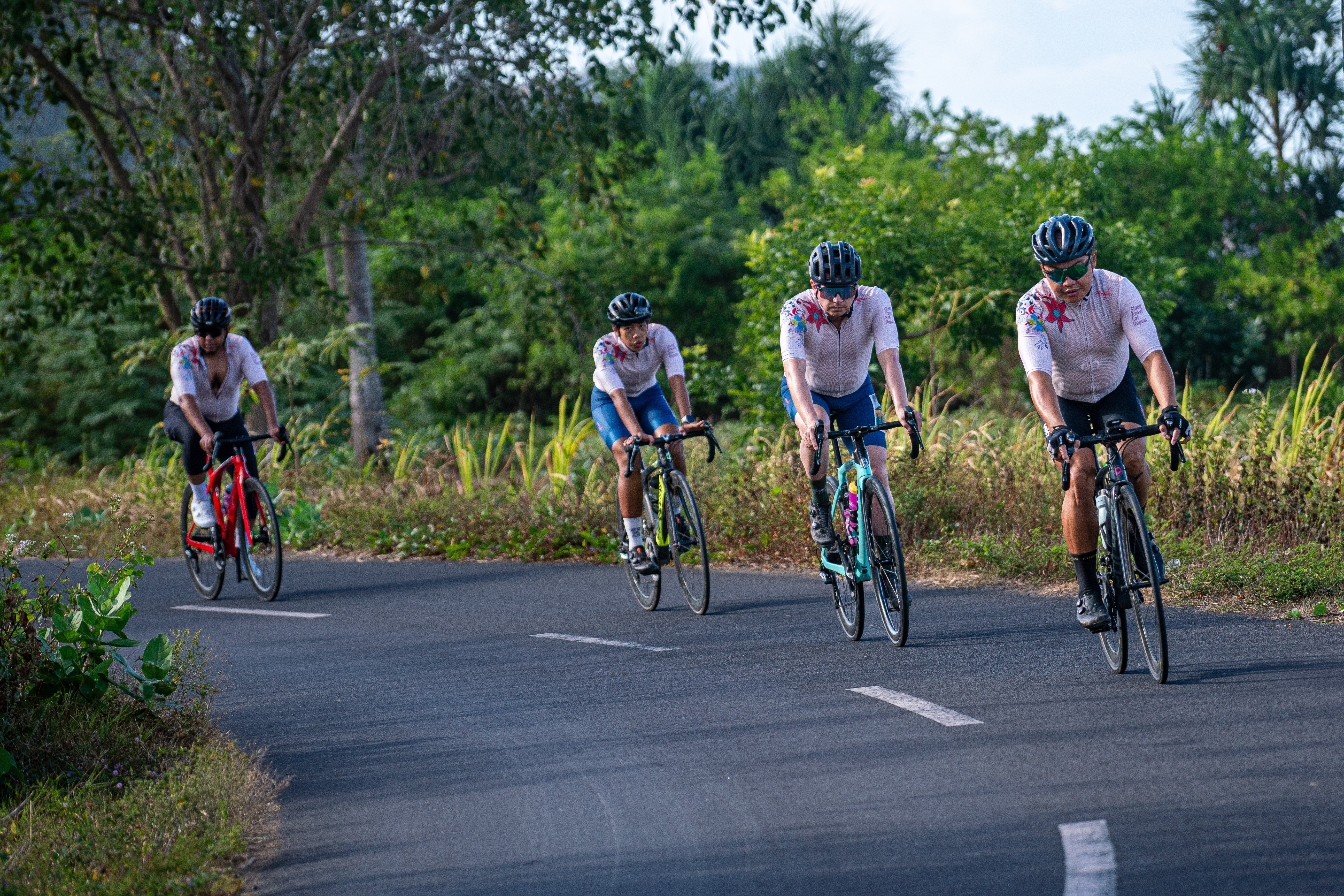


Everyone rides Japan the same way: pack up every morning, move every night, and spend half the trip staring at a train schedule. There is a better way.
We run Japan from a hub. Two nights in Osaka, four in Kyoto, and every morning you roll out of the same door and come back to the same bed. Unpack once. Ride out daily. It changes everything about how the trip feels.
Why the hub model wins
Japan is dense in a way that rewards staying put. The riding out of Kyoto alone — temple climbs, quiet mountain roads, rivers that cut through bamboo forest — could fill a week. You do not need to move to see it. You need to stop moving so you can actually ride it.
The hub model means you wake up, ride, come home, and go again the next day. No repacking. No luggage in a van. Just days that build on each other.
The riding
Kyoto sits in a bowl of mountains, and the roads climb out of it in every direction. One day it is the Arashiyama bamboo forest, the next it is a temple-topped pass, the next it is the quiet valley roads where the traffic disappears entirely.
It is road riding, mostly — Japan's back roads are smooth and quiet — but the climbs are real, and the descents are long. This is not a flat tourist loop. This is proper riding.
When to go
Autumn, without question. October and November turn the Kyoto hills gold and red, the air turns crisp, and the riding is perfect. Spring is a close second, when the cherry blossoms line the rivers. Avoid the summer heat, which sits heavy in the valleys.
What else you get
Because you are staying in one place, the days end differently. An onsen in the evening. A tea ceremony. A proper meal instead of whatever is near the next hotel. You finish a ride and you actually absorb where you are, instead of checking into somewhere new.
That is the whole point of the hub. The riding is the reason you come. The staying is the reason it feels the way it does.