


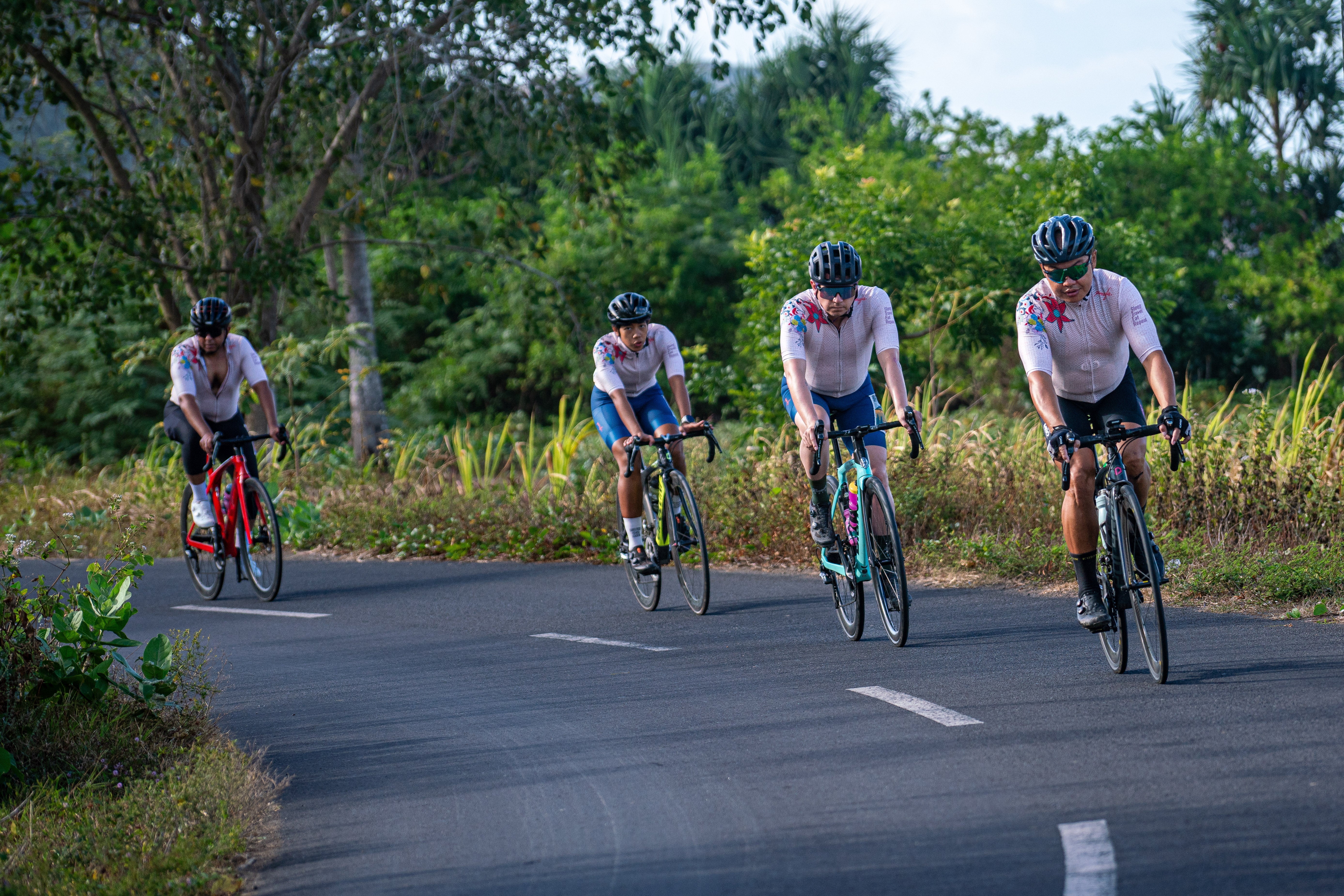


Sicily doesn't do cycling by half measures. The island that gave the world cannoli, Mount Etna, and some of the most unapologetically dramatic coastline in the Mediterranean is not a place you experience properly from a bus window. You experience it on two wheels, with the right bike, the right route, and the right people. That's what Sicilian boutique cycling means — and it's a world apart from the standard tour model.
Boutique cycling in Sicily isn't about bigger groups, cheaper hotels, and pre-planned buffet stops. It's about small groups — four to ten riders — riding titanium bikes through villages where the espresso is pulled by someone who's been doing it for 40 years and the pasta is made that morning. It's about routes chosen by people who've ridden them, not by an algorithm. It's about finishing a climb and finding lunch waiting at a family-run agriturismo, not a tourist cafeteria.
Here's what boutique cycling in Sicily actually looks like, and why it matters if you're considering the island for your next trip.
Small Groups, Real Flexibility
The defining feature of boutique cycling is group size. Standard tour operators run groups of 20 to 30 riders — enough to fill a coach, enough to overwhelm a small village piazza, enough to turn a scenic road into a peloton that irritates every local driver on it.
Boutique operators cap at ten riders, often fewer. On a Qunafa East Sicily cycling tour, the typical group is six to eight. That number changes everything.
Small groups can stop spontaneously. If someone spots a pasticceria with cannoli the size of your forearm, the group stops — no committee decision, no logistics manager to consult. Small groups can take roads that a 30-rider train simply cannot: narrow lanes through Sicilian vineyard country, single-track shortcuts that connect two valley towns, climbs where the only traffic is a shepherd and his flock.
Small groups also mean the route adapts to the riders, not the other way around. If the group is strong and the weather is clear, the guide adds a climb. If legs are tired from yesterday's Etna effort, the route softens. That flexibility doesn't exist when you're running a megaphone and a schedule.
The Routes: Sicily's Terrain Is the Star
Sicily's cycling terrain is extraordinarily diverse for an island. In a single week, you can ride through four distinct landscapes — each of which would justify a trip on its own.
The Madonie Mountains: Inland Sicily at its most cinematic. The Madonie are a limestone range east of Palermo, cut with deep valleys and topped by medieval villages — Petralia Soprana, Gangi, Castelbuono — that have barely changed in 500 years. The roads are quiet, the climbs are sustained without being brutal, and the descents sweep through oak forest before opening onto views of the Tyrrhenian Sea. This is where boutique cycling shows its value: the best routes here are not on any cycling app. They're known by the guides who grew up riding them.
Mount Etna: Europe's most active volcano is also one of its greatest bike climbs — 29.5 kilometres from Nicolosi to Rifugio Sapienza, transitioning from citrus groves to lava fields to lunar summitscape. The Etna climb is a bucket-list ride, but the surrounding roads are equally worth your time: the vineyards of the eastern flank, the quiet lanes around Randazzo, the descent through chestnut forest to Linguaglossa. Boutique operators structure Etna as a full day — climb in the morning, wine tasting in the afternoon — rather than a rushed box-tick.
The Baroque Southeast: The Val di Noto region — Ragusa, Modica, Noto, Scicli — is a UNESCO World Heritage landscape of honey-coloured baroque towns connected by rolling roads through carob and olive groves. This is gentler terrain, ideal for recovery days or mixed-ability groups. The riding rewards looking up, not just ahead: every town reveals itself as you round a corner, balanced impossibly on a hillside.
The Coast: Sicily's coastal roads range from the dramatic (the San Vito Lo Capo peninsula) to the serene (the Vendicari nature reserve south of Noto). A boutique tour weaves these sections in as transitions between the interior climbs — a morning of coastal flats to warm up before the afternoon's mountain work, or a sunset spin along the Ionian after a rest day.

Food, Lodging, and the Things That Aren't Cycling
Standard cycling tours treat food as fuel and hotels as beds. Boutique Sicily treats them as half the reason you came.
Sicilian cuisine is distinct from mainland Italian — it's richer, more layered, shaped by Greek, Arab, Norman, and Spanish influences that each left something on the plate. A boutique tour doesn't feed you at hotel buffets. It sends you to places like an agriturismo outside Noto where the ricotta is made that morning and the pasta alla Norma uses eggplant picked from the garden you're sitting next to. It stops at a frantoio (olive mill) in the foothills of Etna for an oil tasting that will ruin supermarket olive oil for you forever.
Lodging follows the same logic. Boutique Sicily means restored masserie (fortified farmhouses) with pools overlooking the valley, boutique hotels in converted palazzos in the historic centre of Ortigia, and agriturismi where the host family has been farming the same land for four generations. These aren't interchangeable chain hotels — they're part of the experience, chosen because they're where the guide would stay on their own holiday.
The non-riding hours matter because cycling in Sicily is not an all-day grind. A typical boutique itinerary rides four to five hours a day — roughly 80 to 100 kilometres with 1,200 to 1,800 metres of climbing — leaving the afternoon open. Some riders swim. Some walk into town for granita and brioche. Some nap by the pool. The point is that the day isn't structured to maximise mileage; it's structured to maximise Sicily.

The Bikes: Why Equipment Defines the Experience
Boutique cycling means premium equipment, and that starts with the bike. Qunafa's Sicily tours run on the **Shahrazad Titanium** — a frame material that happens to be ideal for Sicilian roads. Titanium dampens road vibration on the rougher back lanes, climbs efficiently on Etna's sustained gradients, and handles the high-speed descents with composure. It's not a rental fleet of aluminium endurance bikes with worn chains and mystery gearing.
The bike is set up for you before you arrive — saddle height, stem length, pedal system. You show up, do a quick shakedown spin, and ride. If you're particular about your fit, you send your measurements ahead and the bike is waiting. If you want to bring your own saddle or pedals, they're fitted on arrival.
Support follows the same standard. A boutique tour runs with a support vehicle that carries spare wheels, nutrition, water, and whatever layers you shed as the temperature climbs. It's not the "broom wagon" that sweeps up stragglers. It's there so you can ride without a backpack, knowing the bike you're on is maintained and the route ahead is recon.
Who Boutique Sicily Is For — and Who It Isn't
Boutique cycling in Sicily is for riders who want more than a training camp. If your primary goal is maximum kilometres and minimum body fat, there are better formats for that — structured training camps in Girona or Calpe where the day is built around power zones and recovery protocols.
If your goal is to ride through extraordinary terrain while eating food you'll tell people about and staying in places that don't feel like a compromise, boutique Sicily is exactly right. The riding is serious — Etna is not a novelty climb, and a Madonie loop with 1,800 metres of elevation is a proper day — but it's not the only point. The point is Sicily itself, experienced at the speed of a bicycle.
For riders considering a self-guided tour, the boutique model offers a middle ground: route support and local knowledge without the inflexibility of a large group. You get the roads only locals know, the lunch stops that aren't in guidebooks, and the mechanical support that lets you push harder than you would solo.
Sicilian boutique cycling isn't a category you'll find in brochures. It's a standard of experience — defined by group size, route quality, equipment, and depth of local connection — that exists because riders who've done it once rarely want to go back to the standard model. If that sounds like you, the island is waiting.
*Qunafa runs boutique cycling tours in East Sicily and the Madonie mountains from March through November. Small groups, titanium bikes, Mediterranean cuisine, and routes you won't find on Strava. Browse East Sicily, Madonie Sicily, or self-guided options.*
Related reads: why Sicily should be your next cycling destination · 5 most beautiful cycling routes